Monthly Archives

August 2012

New York City – Part 3 & Recipe

August 29, 2012

katie-in-new-york-city-part-three

A great trip lingers with you long after you return home. A successful holiday is one where memories are unpacked long after the suitcase is emptied and the laundry is done. It’s been more than a few weeks since I came back from New York City and I’m starting to realize that my trip reorganized a few things in my life while I was away: I’ve got a travel bug to foster and a whole new set of cravings to grapple with.

The city has instilled in me more purpose and inspiration in the every day, which are ultimately great things. NYC is where trends are set, tastemakers abound, and culture flourishes. I find inspiration comes from noticing what’s around…the sites, sounds and even smells. From the graffiti on the street to wandering local markets –  it’s a wake up call for my senses. I take this newly refreshed outlook with me to the kitchen and other areas of my life in the hopes I can inspire others to lead full, happy lives.

Since my return to Ireland, my imagination whirls over gems of stories of the NYC food world. I ate pretty amazingly on this trip. We tried the brand new raw eatery of Gingersnap’s Organic, had fresh baked treats from Life Thyme Natural Market, had a picnic salad in Central Park courtesy of Whole Foods, ate exotic cuisine (Thai, Japanese, Pakistani), purshaced a quinoa falafel while browsing Smorgasburg Flea Food Market in Brooklyn, drank a delicious smoothie on the boardwalk from Rippers and devoured a homemade meal while sipping on cocktails on my sister’s rooftop oasis. In sum: we ate great food.

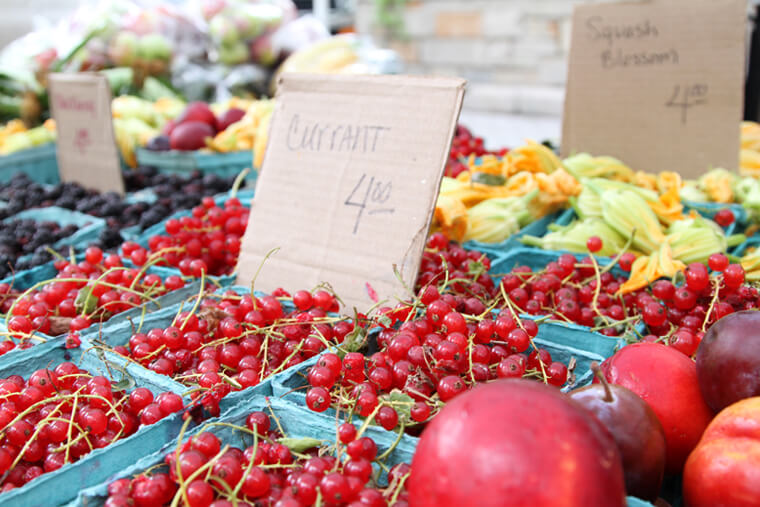
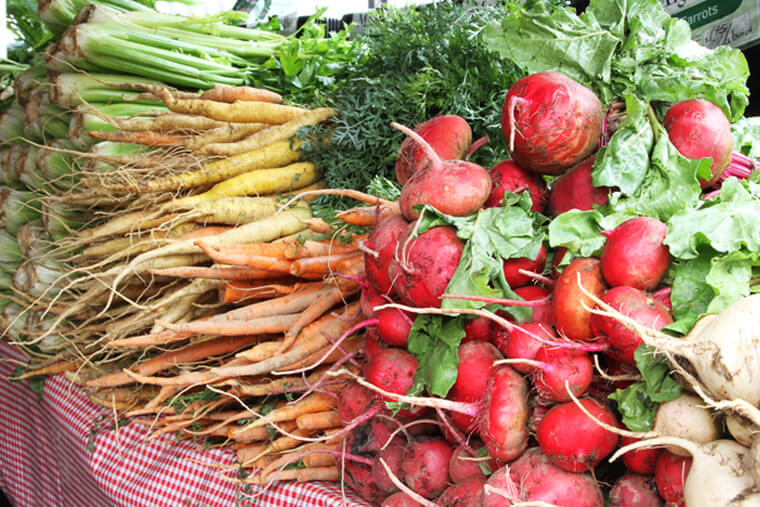
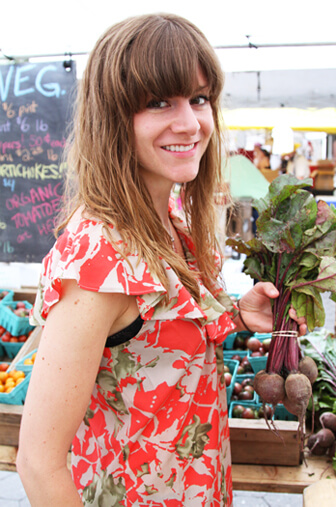
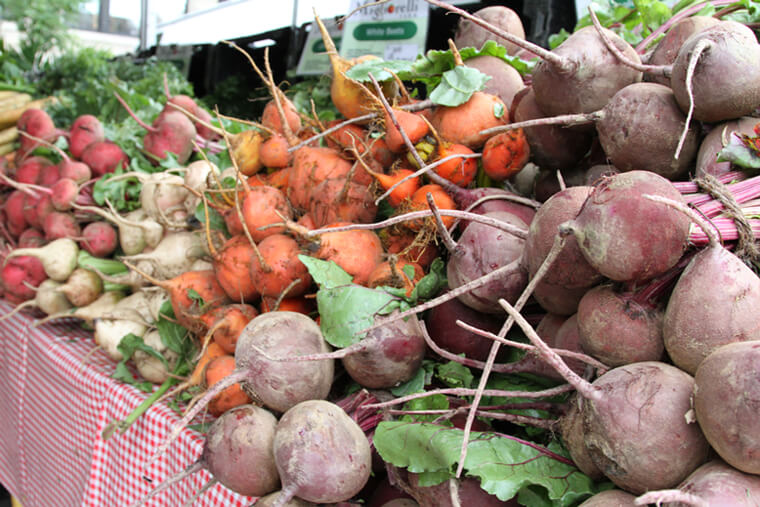
One of my favorite things to do at this time of year to find inspiration is to visit the local farmer’s markets – especially the ones that are so abundant in New York City. From the rows of fresh fruit and produce to bundles of cut flowers, it’s as much a treat just to visit as the fresh produce I take home with me is to eat. My last day in New York was spent with my sister wandering the Union Square Greenmarket. Hundreds of regional farmers, fishermen, and bakers descend upon Union Square to sell their products. The atmosphere on a market day is electric with bustling crowds and farmed culinary treasures as far as the eye can see. After a thorough perusal of the goods up for sale, I settled on the ripest mango, fresh berries, limes and the most beautiful flower arrangement.
katie-norris-new-york-city

farmers-market-beets


farmers-market-currant

union-square-farmers-market

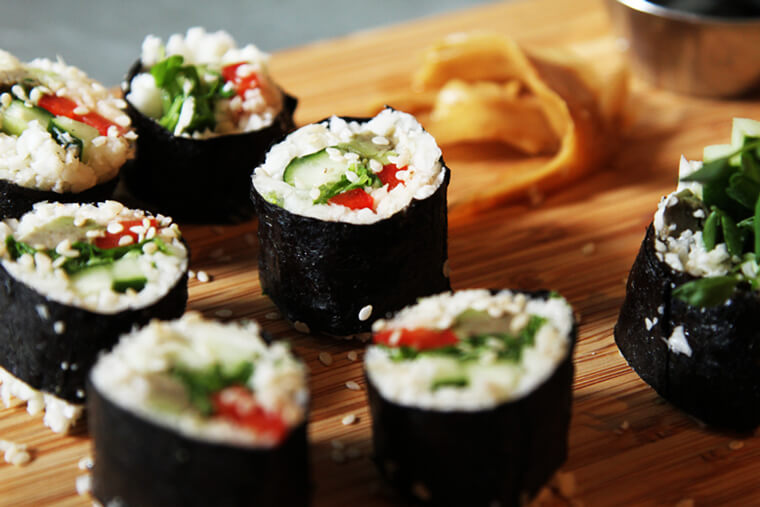
Those memories have been just the reason why I’ve been spending so much time in my kitchen trying to recreate some of my culinary experiences. One of my favorite things I tried while on my travels were the Nori Rolls from Gingersnap’s Organic in the East Village. My sister and I popped in for a quick lunch and quite enjoyed the nori rolls, which were light but definitely flavorful and actually very reminiscent of veggie sushi. The dish features avocado, bell pepper, and sprouts, all tucked inside “rice” made from finely chopped cauliflower. Soy, pickled ginger, and wasabi stand guard to add additional flavor. I’ve attempted making this dish at home since returning from NYC. Though my version was almost nearly as delicious, my rolling skills could use some practice. It is a very simple recipe if you can master the art of rolling the nori. Why not give it a go the next time you’re in the mood for a raw meal?
raw-cauliflower-sushi-rice

Raw Cauliflower “Sushi Rice” 

Makes approx. 3 cups

Ingredients:

  • 1 head of cauliflower
  • 1 tsp. minced ginger
  • 1 clove garlic
  • 1 tsp. nama shoyu, or to taste
  • Pinch sea salt
  • a little squeeze of lemon juice

Directions:

  1. Place all of the ingredients in a food processor and pulse until the cauliflower is ground up small. Be careful not to over-process, stop when it looks like rice.

Nori Rolls

Makes two large rolls which can be cut into 8 pieces each

Ingredients:

  • 1 bamboo sushi mat
  • 2 nori sheets (if you want to keep it 100% raw make sure you get un-toasted)
  • 2 cups cauliflower “rice”
  • 1/2 large avocado or 1 small, sliced length ways
  • choice of vegetables, finely sliced and/or grated (I used sliced carrot, cucumber and grated beetroot)
  • sprouts of choice
  • sesame seeds for garnishing (optional)
  • low sodium gluten-free tamari or nam shoyu sauce, to serve (optional)

Directions:

  1. Prepare your work station with all ingredients ready to go into the nori rolls.
  2. Lie the nori sheet on your bamboo mat, with the smoother side face down and spread 1 cup of “rice” evenly over a section of it.
  3. Press the rice down firmly and top with veggies, avocado and sprouts in layers down the center.
  4. Take the side of the mat closest to you with only the small bit of seaweed exposed and gently roll over the mound of filling, squeezing lightly. Then continue to roll up tightly until you meet the other edge of the nori. Wet a thin strip at the far end to seal the roll together.
  5. Take a sharp knife with a serrated blade and carefully slice the roll into 8 pieces. Sprinkle with sesame seeds and enjoy with tamari or shoyu dipping sauce.
 

Strawberry Rhubarb Pie

August 23, 2012

strawberry-rhubarb-pie

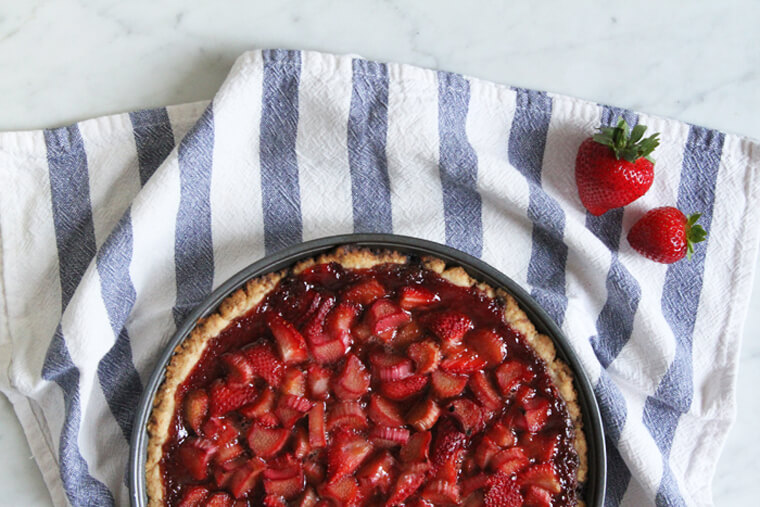
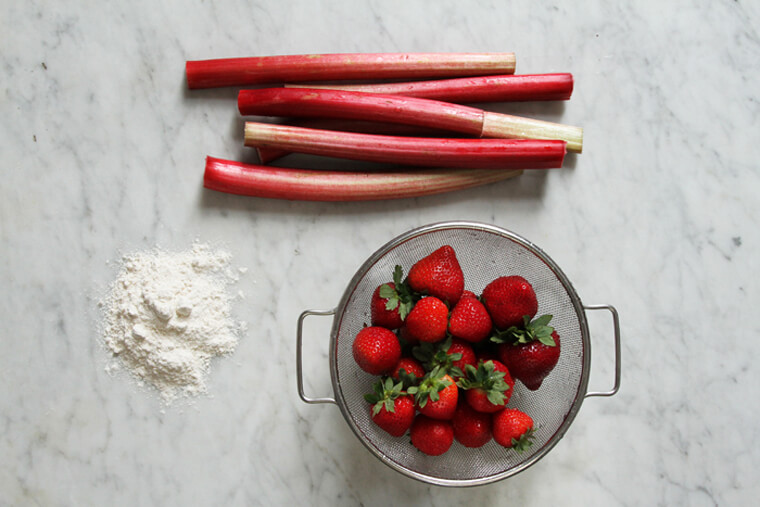
Rhubarb is one of the season’s sweetest gifts. These crisp, tart stalks that look like ruby-red celery start appearing in the farmer’s market in early spring. They get snapped up in a hurry by eager bakers, but to the uninitiated they are a bit of a mystery. That’s because rhubarb looks so much like a vegetable — it is in fact a vegetable– and is so lip-puckering sour that someone who’s never tried it before can’t help but wonder how it would fit in with sweets, where it is most often used. Well, I have an easy solution to make you a believer: put some rhubarb where your mouth is. But first, bake it into a pie, like this one I have for you today.

Strawberry rhubarb pie is adored by many, in spite of or perhaps because of its old-timey charm. At their best, cooked strawberries taste like cotton candy and rhubarb is the perfect almost citrusy-sour contrast. There’s no twist here, nothing fancy whatsoever. This recipe is simple, just the way I like it. I want you to have access to the most balanced approach to a strawberry rhubarb pie. This is a recipe to keep in your back pocket, taped to the inside of your pantry cabinet, or simply seared into your mind.

Vegan & Gluten-Free Pie Crust

Makes 1 approximately 9″ pie crust

Ingredients:

  • 1 1/2 cups rice flour (brown or white)
  • 1/4 tsp. baking powder
  • 1 Tbsp. agave nectar, or sweetener of choice
  • pinch of salt
  • 1 Tbsp. ground flaxseed + 3 Tbsp. water
  • 1/4 cup dairy-free buttery spread, melted
  • cold water

Directions:

  1. Stir together the flaxseed mixture and melted dairy-free buttery spread.
  2. Sift together the dry ingredients over the wet ingredients. Stir the dough together – it will be soft and crumbly. Add enough cold water so that the dough can be pressed together and holds.
  3. Lightly oil the pie pan.
  4. Press the dough into the pie pan and up the sides as far as possible being sure to keep the crust an even thickness. I use a flat bottomed measuring cup to help make the crust even and flat.

pie-strawberry-rhubarb

Strawberry-Rhubarb Filling

Ingredients:

  • 3 cups thinly sliced rhubarb
  • 2 cups rough chopped strawberries
  • 1/2 cup agave nectar, or sweetener of choice
  • 1/4 cup tapioca or cornstarch (gluten-free)
  • 1 Tbsp. fresh lemon juice
  • 1 tsp. lemon zest

Directions:

  1. Preheat oven to 425° F (218° C).
  2. Combine all of the filling ingredients together in a large mixing bowl.
  3. Add filling to the prepared pie shell. Cover loosely with tin foil and poke a few holes in the foil to let steam escape.
  4. Bake for about 20 minutes at 425° F (218° C). Lower heat to 350° F (177° C), and remove the tin foil. Bake for an additional 30 to 35 minutes, filling should be bubbling and the crust should be golden.
  5. Place on a cooling rack and let cool for about 30 minutes before serving.


(Photo Credit: my sister, Jenny Norris – jjnorris.com)

New York City – Part 2

August 16, 2012
katie-in-new-york-part-two-chinatown

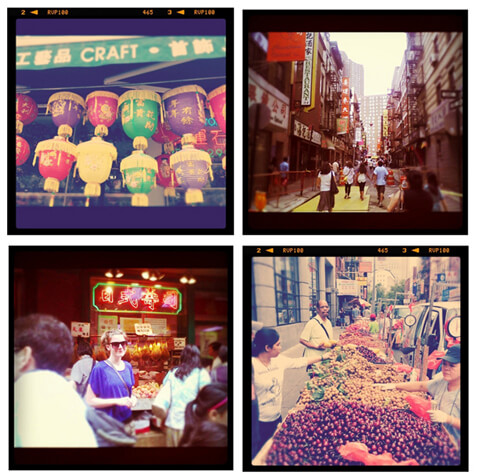
No trip to New York City would be complete without exploring Chinatown. Chinatown provides a fascinating historical and cultural experience not found anywhere else in the world. It is almost like a unique city-within-a-city, offering a completely diverse array of regional cuisines, interesting stores and unique sights.

Though this may not have been my first visit to Chinatown, I still can recall my initial impression of Chinatown was an overwhelming feeling of the unfamiliar and mysterious. There were huge piles of fish and strange produce glistening on the sidewalk in cardboard boxes, the pungent smells, impenetrable language and strange customs. Yet as I grew more comfortable with this intriguing neighborhood, its many charms were slowly revealed. It was no longer an area of cheap designer knock-off handbags and pork fried rice. I saw it as an indispensable part of the city – a neighborhood that was just as integral to my view of New York as the Statue of Liberty or the East Village.

We spent hours that day exploring the many streets of Chinatown. One of our historical experiences included a visit to the colorful Mahayana Buddhist Temple, seated at the foot of the Manhattan Bridge. Within this temple lies a large urn full of burning incense; for a dollar donation, you can get your very own rolled, rubber-banded fortune. Deeper in the building is what is believed to be the largest Buddha in the city: a 16-foot gold statue resting on a lotus flower. It is a beautiful and tranquil spot in the middle of NYC.

The streets of Chinatown are great for wandering — there are fabulous stores for buying Asian groceries and goods -which make great souvenirs. The exotic fruits available at many street stands throughout Chinatown are beautiful to look at and delicious to experience.

Dragon Fruit

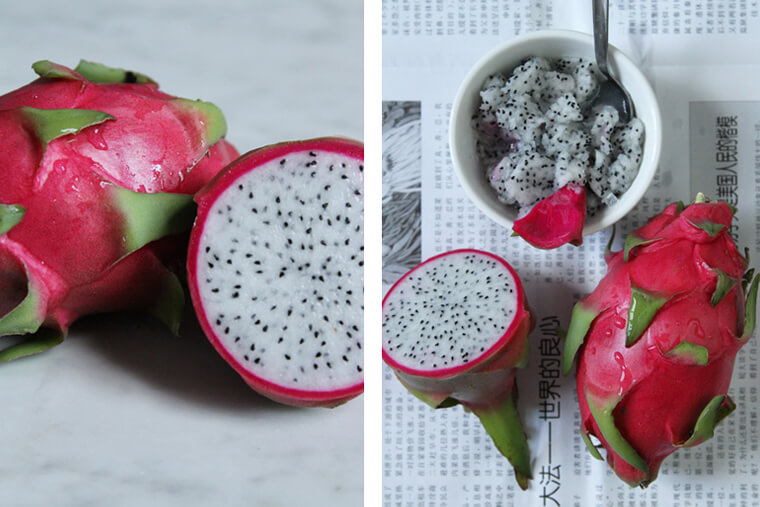
dragon-fruit

Dragon fruit, otherwise known as the pitaya fruit, is an exotic fruit with a beautifully intense color and shape. It is grown in a cactus, this cactus blooms only at night when they reveal their dazzling flowers. There are a few varieties of dragon fruit – while some are dark pink, others are yellow or white. To eat dragon fruit just cut it in half and scoop out the flesh. I think the texture and taste is similar to that of kiwi fruit. The flavor is mild, yet very refreshing.

The dragon fruit’s nutritional profile boasts high concentrations of certain nutrients, offering a plethora of health benefits. It is an excellent antioxidant, which helps prevent the spread of free radicals within the body. It is able to lower cholesterol levels and high blood pressure naturally. Dragon fruit also provides a rich source of vitamins B1, B2, and B3. This vitamin helps to increase energy levels, metabolize food and even improve the quality of one’s skin. Dragon fruit seeds are also very beneficial as they provide a source of essential fatty acids. What’s more, the fruits are very low in calories and high in fiber. Because of its ability to lower blood glucose levels naturally, those suffering from diabetes can also benefit from eating dragon fruit.

This versatile fruit can be served whole or as a beverage if squeezed. It can also be used to make spreads, jams and preserves.

Lychee

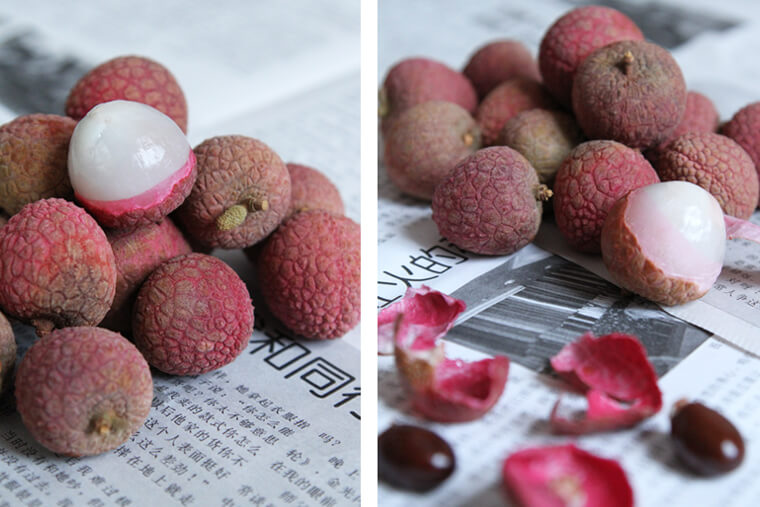
lychee

Lychee is a sweet and tasty  fruit that is a symbol of love and romance in China. From a nutritional standpoint, lychee fruit is low in calories, high in fiber, high in vitamin B complex and vitamin C and loaded with minerals such as potassium. To get at the fruit, you peel off a leather-like skin. The fruit surrounds a rather large seed in the middle. The taste somewhat resembles that of grapes and is also quite juicy. If the fact that lychee is delicious doesn’t convince you to try it, maybe learning more about some of the health benefits will make you give this tropical fruit a second look.

Apart from its sweet and tangy flavor, Lychee has significant health and nutritional benefits. It is a very good source of B-complex vitamins such as thiamin, niacin and folates. These vitamins are essential since they function by acting as co-factors to help body metabolize carbohydrates, protein and fats. Research studies suggest that oligonol – a polyphenol found abundantly in lychee fruit has been found to have several anti-oxidant, anti-influenza virus actions. In addition, it helps improve blood flow in organs, reduce weight, and protect skin from harmful UV rays.

I like eating lychee fruit fresh. There’s something so satisfying about peeling off the skin to get to the fruit. But if you fancy trying something more adventurous, they make a natural addition to fruit salads and desserts. They can be used in sweet-and-sour sauces as well as dessert sauces. Lychee fruit also makes a great tasting addition to smoothies.


(Photo Credit: my sister, Jenny Norris – jjnorris.com)

Gourmet Popsicles

August 11, 2012

Gourmet popsicles are making their way as the newest food rage. You can see evidence of that in some way in just about every food publication you pick up, on any food show on television and all over the internet. There is hardly a specialty food market, farmer’s market or food truck anywhere that does not have some representation of these handcrafted, gourmet frozen confections. And why not? They are fun, creative, and in most cases, a healthy option to some of the overly sweetened, processed frozen treats that have been making the scene for years.

Ever since we browsed the People’s Pops stall at the Brooklyn Flea Market, I starting gathering a little inspiration for my own homemade artisan popsicles. We purchased fruit from farmer’s markets and condensed it into the form of a simple and nostalgic summertime staple. With temperatures reaching  over 90 degrees while visiting NYC, the popsicles we made at my sister’s apartment were the perfect antidote to the heat — if only for a few minutes.

Ginger Tea Cherry Popsicles

Ingredients:

  • 1.5 cups hot water
  • 2 ginger tea bags
  • 1 Tbsp. agave nectar, or sweetener of choice
  • a pinch of salt
  • 1 cup of pitted cherries (I used sour cherries)
  • 1 Tbsp. lemon juice

Directions:

  1. Steep ginger tea bags in hot water for 5 minutes.
  2. Discard tea bags and stir in agave nectar. Set aside to cool.
  3. Add lemon juice and salt. Stir to combine.
  4. Pour the ginger tea concoction into popsicle trays and add cherries. Freeze completely (4-5 hours).
  5. To un-mold, place popsicle trays under running hot water for a few seconds.

Almond Pear Popsicles

Ingredients:

  • 1.5 cups almond milk
  • 1 pear, sliced
  • ½ tsp. almond extract
  • 1 Tbsp. agave nectar, or sweetener of choice
  • Pinch of cinnamon

Directions:

  1. Place almond milk into a small bowl. Stir in almond extract, agave nectar and cinnamon.
  2. Pour mixture into popsicle trays and add pear slices. Freeze until set (4-5 hours).
  3. To un-mold, place popsicle trays under running hot water for a few seconds.

Enjoy!

(Photo Credit: my sister, Jenny Norris – jjnorris.com)